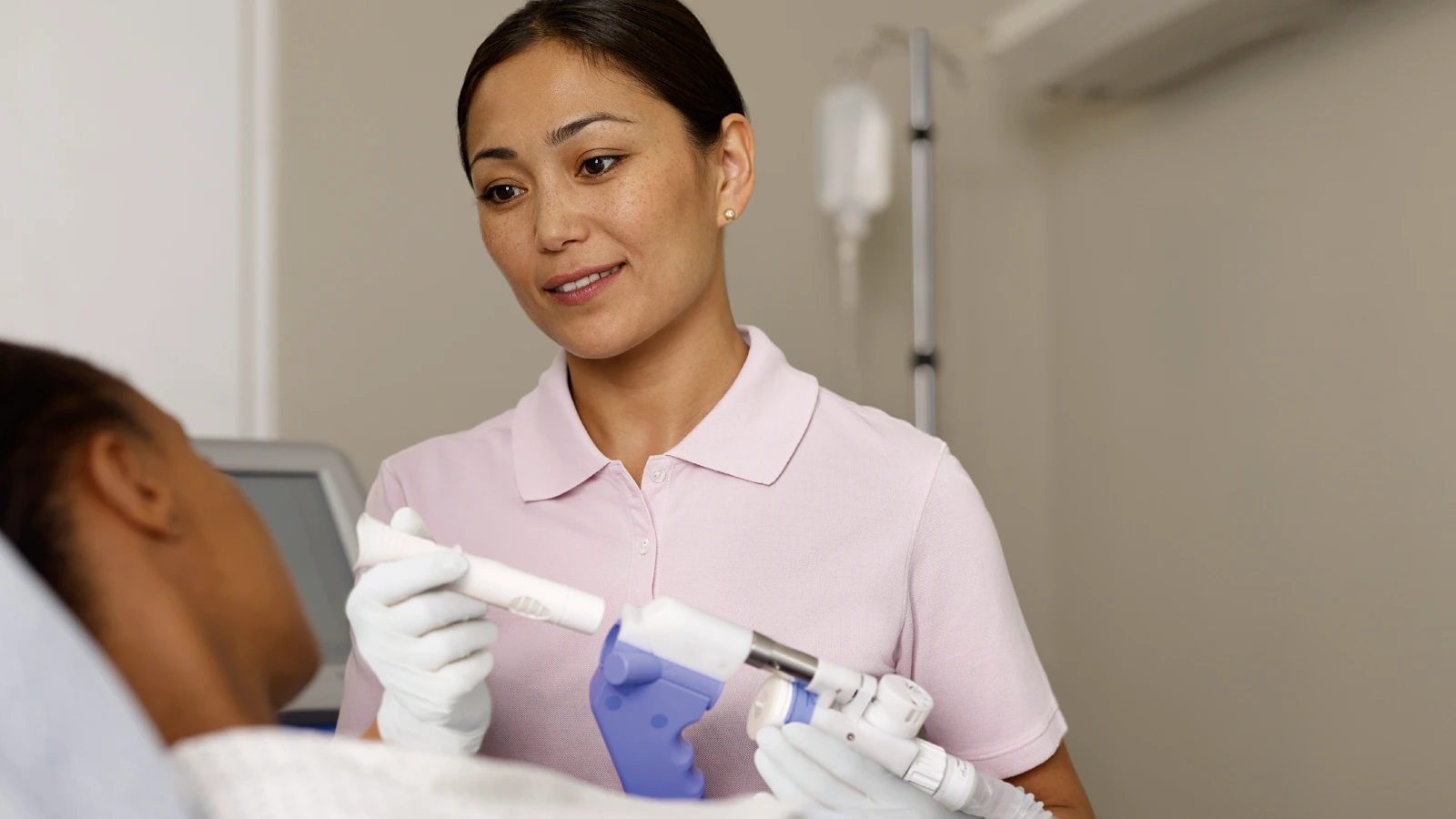
Customer Spotlight: Advanced pulmonary diagnostics in a cardiology practice
Shortness of breath is one of the most common and, at the same time, most challenging symptoms encountered in cardiology practice. Often, only targeted comprehensive diagnostic work-up can determine whether the underlying cause is cardiac, pulmonary, or a combination of both. This is precisely where advanced pulmonary function testing provides crucial clarity and supports a well-founded, early assessment of patients’ symptoms.
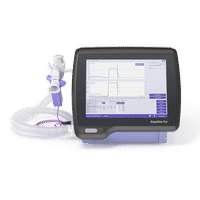
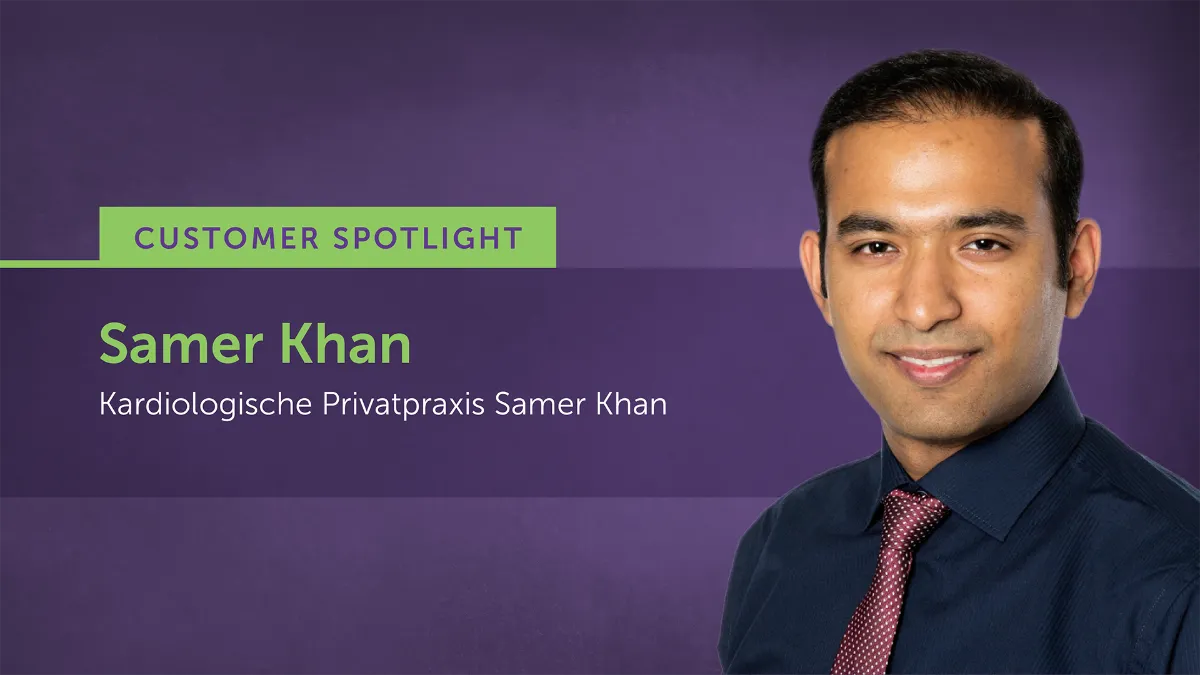
Samer Khan, a cardiologist at his private practice in Bamberg, has been using the EasyOne Pro for the past year. In this interview, he explains why he chose a compact DLCO and lung volume system, the added value of the additional lung function insights it provides for his patients, and where he sees future potential for pulmonary diagnostics in cardiology.
Mr. Khan, your predecessor at the practice had already been using an ndd spirometer and had positive experiences with it. Based on this, you also approached ndd regarding DLCO testing. What ultimately led you to invest in the EasyOne Pro and bring advanced pulmonary function testing into your practice? #
For me, the main objective was to better differentiate whether shortness of breath in my patients is primarily cardiac, pulmonary, or caused by a combination of both. Basic spirometry provides important initial information. However, I also wanted to be able to measure parameters such as diffusing capacity, total lung capacity, and residual volume. These values help me assess the overall clinical picture much more effectively.
A conventional body plethysmograph would theoretically have been another option. Why did you decide against it? #
A body plethysmograph was not an option for me, partly because of the additional space required and the more demanding maintenance. As a cardiologist, what I primarily need are the comprehensive lung function measurements without having to set up a large pulmonary function laboratory. The EasyOne Pro allows me to integrate DLCO and lung volume measurements into my practice in a compact setup.
The EasyOne Pro enables me to perform advanced pulmonary diagnostics in my cardiology practice without having to set up a large pulmonary function laboratory.


What specific added value do you see for patients with shortness of breath? #
The combination of diffusing capacity and lung volume measurements is particularly informative when performing a differential assessment of shortness of breath. For example, I see patients with pulmonary hypertension or lung diseases in whom diffusing capacity is reduced. When other examinations, such as cardiac ultrasound, don’t provide further information on the underlying issue, lung function measurements can provide crucial indications for initiating further diagnostics, such as a CT scan, or for referring patients specifically to a pulmonologist.
Are there situations in which the additional measurements have allowed you to act earlier? #
Yes. In some cases, we were able to identify COPD in patients for the first time and initiate early measures, such as recommending smoking cessation. Some patients subsequently also consulted a pulmonologist, which I consider very beneficial. Without these comprehensive lung function measurements, it would have been considerably more difficult to pursue this diagnostic pathway so early and in such a targeted manner.
What advantages do you see beyond the diagnostic benefits? #
Reimbursement also plays a role for us. The additional lung function measurements allow us to bill for a broader range of services than before. At the same time, a major advantage is that the EasyOne Pro enables us to determine total lung capacity and diffusing capacity without the need for a body plethysmograph. Integration with our practice management software also works seamlessly.
The advanced parameters help me make a better assessment in patients with shortness of breath as to whether the cause is primarily cardiac, pulmonary, or a combination of both.
Conclusion #
The conversation with Mr. Khan highlights the potential value that advanced PFT can provide clear clinical value beyond traditional pulmonology settings. Particularly in cardiology, where patients frequently present with shortness of breath, DLCO and lung volume measurements provide valuable additional information that can help identify pulmonary causes at an early stage, guide further diagnostic testing, and refer patients more quickly to the appropriate specialist care.
About Samer Khan #
Samer Khan previously worked in an academic medical environment, including at the Heart Clinic in Bad Oeynhausen. Today, he is a self-employed cardiologist and has taken over a private practice in Bamberg. There, he invested in advanced pulmonary function testing so that he could continue to use comprehensive lung function measurements in his own practice to support both cardiological and pulmonary clinical decision-making.
His predecessor at the practice had already been using an ndd spirometer and had positive experiences with it. Based on this, Mr. Khan also approached ndd regarding DLCO testing and ultimately decided to invest in the EasyOne Pro.