From a research idea to a global mission: celebrating 30 years of ndd
ndd grew out of a small research project led by Christian Buess, whose work on an ultrasonic flow sensor unexpectedly set the stage for a future in lung diagnostics. That early innovation led to the founding of ndd in 1996 and decades of progress in pulmonary function technology. Today, the company continues its mission to make reliable lung testing accessible worldwide.
How it all started #
The story of ndd began long before the company itself officially existed — with a young ETH Zurich graduate who wasn’t looking for a corporate career at all.
After completing his studies, Christian Buess, PhD, felt no desire to work in industry. Instead, he chose to stay in academia, joining Professor Guggenbühl, whose work and personality inspired him.
What started as a simple research assignment quickly turned into the beginning of a lifelong journey. He was handed a small project, an ultrasonic flow sensor that, at that time, didn’t work. Confident and curious, he estimated it would take three months to solve the problem. Decades later we are still finetuning this innovative technology.
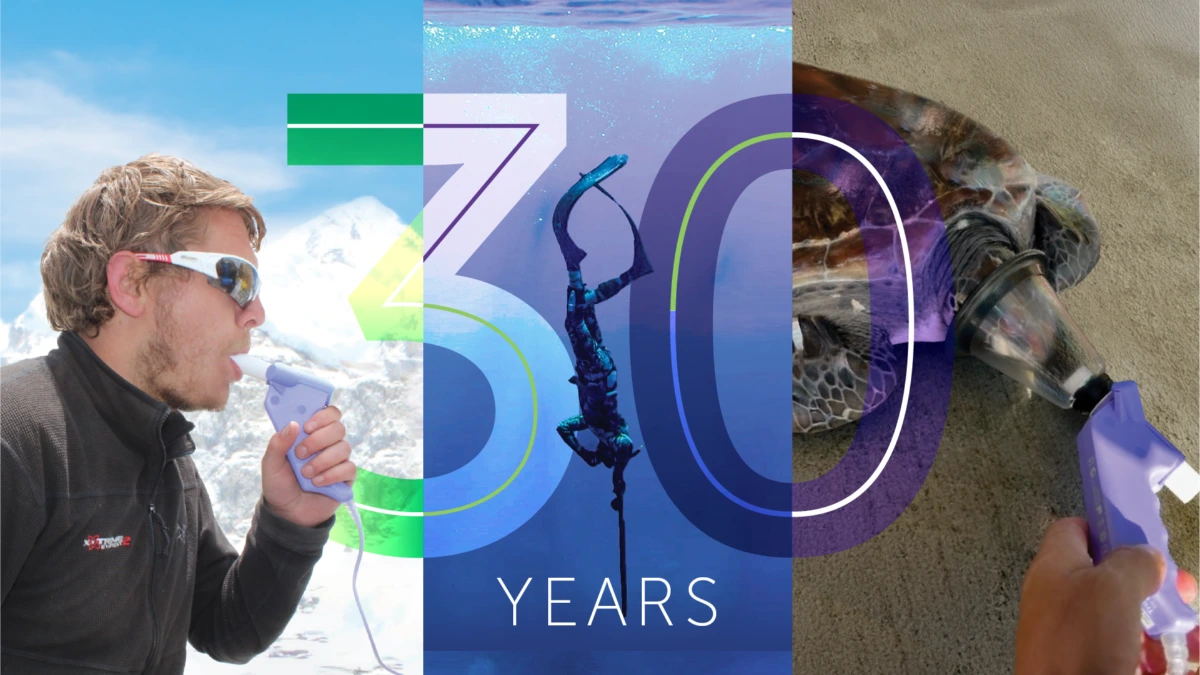
The project, a collaboration with the University of Zurich, focused on measuring breathing in a low-pressure chamber simulating high-altitude environments, a challenging and fascinating setup that attracted visiting researchers, including scientists from the Max Planck Institute in Germany. They saw the potential of the flow sensor for measuring airflow in panting dogs, a surprisingly relevant model for understanding infant breathing during artificial ventilation. This curiosity-driven research soon opened new doors: scientists from NASA and ESA visited the Max Planck Institute seeking ways to monitor astronauts’ breathing during space shuttle flights. The young Zurich researcher found himself contributing to studies ranging from alpine physiology to animal models to space missions, and one resulting publication ultimately caught the attention of Professor Karl Harnoncourt, who traveled to Zurich to meet him in person.
That meeting became the spark, the foundation for what would later become ndd.
What began as a small research idea has grown into a mission that continues to inspire us every day.
Christian Buess


This momentum led to the formal founding of ndd on 18 March 1996, transforming a curiosity driven research project into a company with a clear mission. Shortly after the founding, Georg Harnoncourt joined the company and played a key role in shaping its early direction. He traveled the world to explore how the technology could be commercialized, making important contributions that helped bring the product to market and supported the company’s initial growth.
Just three years later, in 1999, ndd expanded across the Atlantic with the founding of ndd Medical Technologies, Inc. in the United States, a strategic step that strengthened the company’s global presence and brought its innovations closer to clinicians and research partners in one of the world’s most influential healthcare markets. The goal was simple: Make our innovations accessible to clinicians and researchers worldwide.
Growth through the years #
Growth came in phases, each shaped by learning, collaboration, and technological breakthroughs. From the first device launched in 2000, ndd quickly entered the world of largescale clinical research. One of the earliest major studies to use ndd’s technology was the Fresno Asthmatic Children’s Environment Study (FACES), which examined the impact of air quality on lung health in children and helped establish the reliability of EasyOne devices in long-term epidemiological research. Shortly thereafter, major research partnerships followed including the World Trade Center study in 2002 as ndd continued to expand its impact in both clinical practice and scientific research.
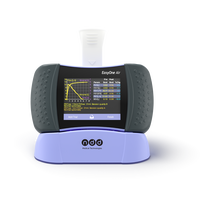
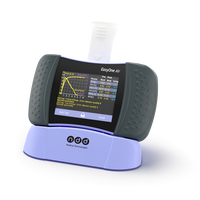
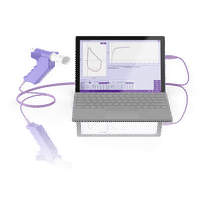
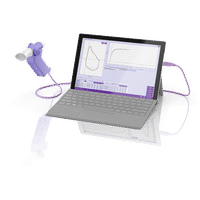
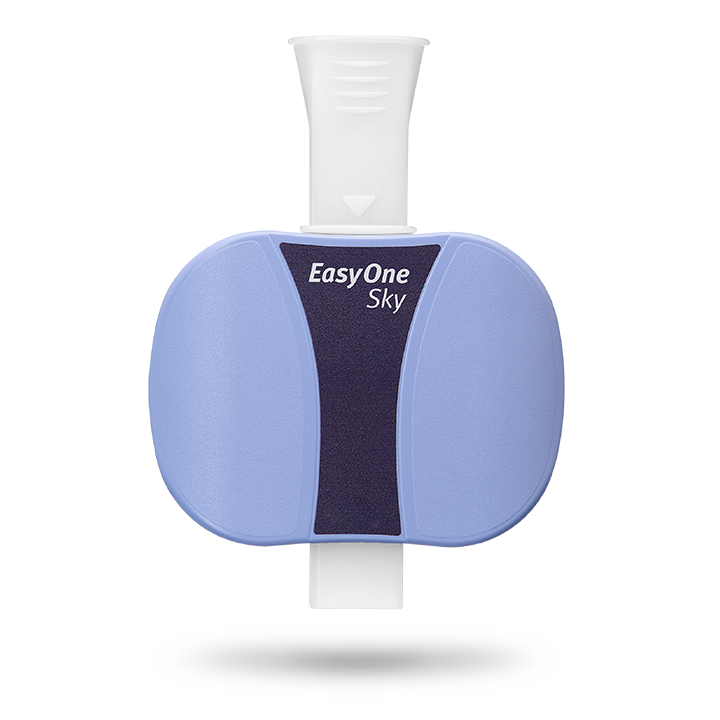
A key driver of this growth was the steady expansion of the product portfolio. In 2009, ndd launched Easy on-PC, followed by EasyOne Pro in 2010, both of which broadened the company’s reach and supported an increasing variety of clinical and research environments. With the launch of EasyOne Air in 2017, ndd took another decisive step, bringing portable, high-quality spirometry to new point-of-care settings and further strengthening its global presence. In 2024, ndd marked another major milestone with the successful launch of the EasyOne Sky, the newest generation spirometer, with Buddy, the spirometry coach.
As ndd’s technology matured, it became part of several landmark global health initiatives.
In 2005, the BOLD and PLATINO studies, two international efforts to assess the prevalence of COPD, adopted the EasyOne ultrasonic spirometer. Their strict, standardized protocols relied on its stability, accuracy, and durability.
Two years later, the COPDGene Study, one of the most ambitious genetic investigations into COPD, selected EasyOne equipment as the standard for spirometry and DLCO testing across all 21 clinical centers. The study has since generated hundreds of scientific publications and continues to shape our understanding of why some smokers develop COPD while others do not.
But beyond clinical research, ndd’s technology has even reached new depths.
The technology is also used to measure pulmonary function in dolphins, whales, and other marine mammals. Scientists hope to answer fundamental questions about diving physiology, disease, and behavior, insights that may also contribute to improving lung care in humans, including premature infants.
These diverse applications reflect a simple truth: innovation at ndd has always been driven by curiosity and meaningful impact.
Innovation that matters #
From the very beginning, our founders’ pioneering research in ultrasonic flow measurement laid the foundation for what would become TrueFlow Technology, a calibration-free approach to pulmonary diagnostics that fundamentally changed how airflow is measured.
This breakthrough made lung function testing robust across an extraordinary range of environments: from everyday clinical practice to veterinary medicine, from high altitude research chambers to sea-level laboratories and even into space.
Looking ahead #
Early diagnosis is critical to improving lung health, not only for identifying disease but also for supporting ongoing management. Lung function testing remains essential throughout the patient journey, and emerging technologies are expanding what’s possible beyond standalone devices. These innovations enable clinicians to deliver more comprehensive care, combining advanced hardware with full-service solutions and ongoing support, helping healthcare teams detect, monitor, and manage lung disease more effectively now and into the future.
We believe we can improve the quality of life for those living with lung disease by helping detect disease earlier. This mission continues to drive us every day.
Georg Harnoncourt
As we move forward, ndd is evolving into a true partner for customers, helping them collect and interpret high quality lung function data with confidence. At the core of everything remains what has always set ndd apart: Early diagnosis for better lung health.