Scaling COPD population health with connected spirometry
This blog incorporates insights from Fortune’s commentary, “Two physicians on ending the waiting-room era: bring care home,” by Benjamin Kornitzer and Dr. Bill Frist, which explores the growing role of home-based care in improving outcomes for seniors with chronic conditions.

A recent Fortune article highlighted a growing shift in healthcare delivery: moving chronic disease management beyond traditional care settings and directly into patients’ homes. As healthcare organizations continue to embrace value-based care and population health strategies, clinician-led, technology-enabled care models are helping improve outcomes while reducing the burden on both patients and providers.
The article featured the work of Monogram Health and Aetna, whose home-based care programs support patients with chronic conditions through proactive monitoring, coordinated care, and in-home clinical services, including diagnostic testing performed by healthcare providers in patients’ homes.. The results demonstrate the potential impact of this approach.
Among patients enrolled in the program for at least 13 months, there was a 32% decline in hospital readmissions and a 16% decline in emergency room visits.


These outcomes reinforce that the future of chronic care is connected, proactive, and increasingly delivered beyond hospital walls.
The challenge of fragmented COPD care #
For patients with COPD, care is often fragmented across multiple providers and care settings. Patients may see primary care physicians, pulmonologists, respiratory therapists, and other specialists, creating challenges in maintaining a complete and up-to-date picture of respiratory health.
Between office visits, visibility into a patient’s condition is often limited. Changes in lung function may go undetected until symptoms worsen, increasing the risk of exacerbations, emergency department visits, and hospital admissions.[^1]
The consequences can be significant. According to the Agency for Healthcare Research and Quality (AHRQ), nearly 20% of Medicare patients are readmitted within 30 days of discharge.
Traditional care models often rely on patients seeking care after symptoms worsen. As healthcare organizations expand population health initiatives, there is increasing recognition that more continuous monitoring and earlier intervention can help close gaps in care and improve outcomes.
What’s driving better outcomes in chronic disease management? #
The success of integrated care models like the Aetna and Monogram partnership is rooted in several key principles:
- Bringing care directly to patients through home-based clinician-led visits
- Using remote monitoring and connected technologies to maintain visibility between appointments
- Leveraging data to identify risks earlier and intervene sooner
- Coordinating care across providers and care settings
Rather than waiting for a patient to experience a serious exacerbation, care teams can identify concerning trends earlier and take action before a hospitalization becomes necessary.
As noted in the Fortune article:
“Last year our partnership delivered 33,975 completed clinical treatments that span pulmonary disorder, heart failure, diabetes and related conditions. Among patients who were enrolled for at least 13 months, there was a 32% decline in readmissions and a 16% decline in emergency room visits.”
For healthcare systems managing COPD populations, these results highlight the value of continuous monitoring, coordinated care, and proactive intervention. The model demonstrates how connected care approaches can improve outcomes while reducing costly utilization across patient populations.
Bringing connected spirometry into the care model #
Healthcare organizations need reliable lung function diagnostic information to support clinical decision-making regardless of where the patient is located.
This is where solutions like the EasyOne Sky spirometer and nddHub can help support modern care delivery models.
EasyOne Sky enables spirometry testing to be performed wherever clinician-led care is delivered, including in patients’ homes, community settings, or remote locations. By enabling healthcare providers to bring lung function testing directly to patients, healthcare systems can improve access while minimizing the need for patients to travel to a clinic, particularly for those in rural or underserved areas. To support testing quality, EasyOne Sky includes Coach Buddy, an interactive spirometry coach designed to help patients perform acceptable spirometry maneuvers. This helps clinicians maintain confidence in the quality of results.
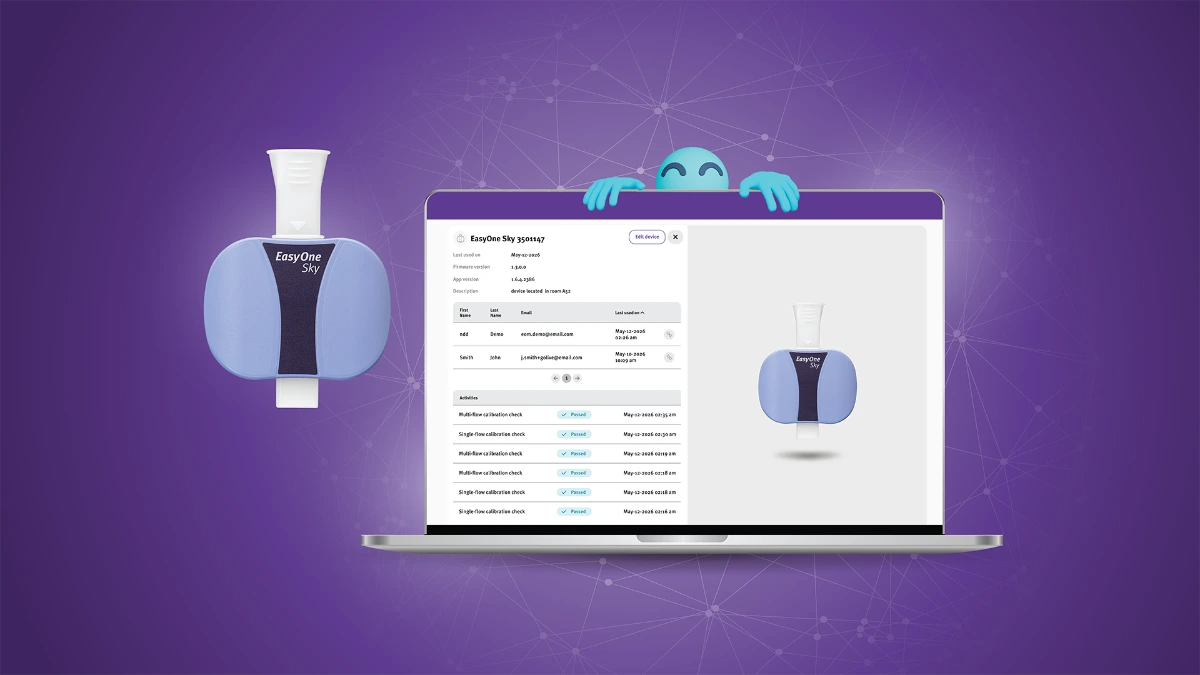
With nddHub, healthcare organizations gain real-time visibility into spirometry testing performance across their network. With a centralized dashboard, administrators can monitor testing activity, track clinic and user performance, identify trends, and uncover opportunities to improve workflows. By providing actionable insights across sites and care teams, nddHub helps organizations operate more efficiently and support earlier intervention.
Connected spirometry helps bring quality testing closer to the patient while providing clinicians with the data needed to support proactive disease management.
From reactive care to proactive population health #
For healthcare systems managing COPD at scale, the opportunity extends beyond individual patient encounters.
By combining connected spirometry with PFT analytics through nddHub, organizations can gain greater visibility into respiratory health across their patient populations.
This approach can help healthcare systems:
- Track testing frequency and compliance across clinics and care programs
- Monitor lung function trends over time
- Identify patients showing signs of decline before symptoms become severe
- Support earlier interventions that may help prevent exacerbations
- Standardize respiratory care workflows across multiple sites
- Generate insights that support population health initiatives
Rather than responding after a hospitalization occurs, care teams can focus on identifying risk earlier and implementing interventions when they are most likely to make a difference.
Supporting the future of value-based respiratory care #
Healthcare continues to move toward value-based reimbursement models that reward outcomes rather than volume. At the same time, organizations are investing in population health initiatives and expanding programs to improve access, enhance patient engagement, and reduce costs.
Connected lung function diagnostics play an important role in supporting these objectives.
Together, EasyOne Sky and nddHub help healthcare systems:
- Expand access to spirometry testing across care settings
- Centralize respiratory health data across clinics and patient populations
- Support proactive COPD management strategies
- Enable more coordinated, data-driven care
EasyOne Sky and nddHub help expand access to spirometry while connecting respiratory data to support more proactive, coordinated care.
Explore EasyOne Sky + nddHub
Looking ahead #
The future of COPD care is connected, data-driven, and proactive. Healthcare systems that can effectively combine clinical expertise, remote monitoring, and objective lung function data will be better positioned to improve outcomes while supporting efficient, scalable care delivery.
By extending access to spirometry beyond traditional care settings and providing respiratory insights, EasyOne Sky and nddHub help healthcare organizations support earlier intervention and enable more proactive, data-driven COPD care.
Learn how nddHub can support your COPD management strategy and help drive better outcomes across your patient population.
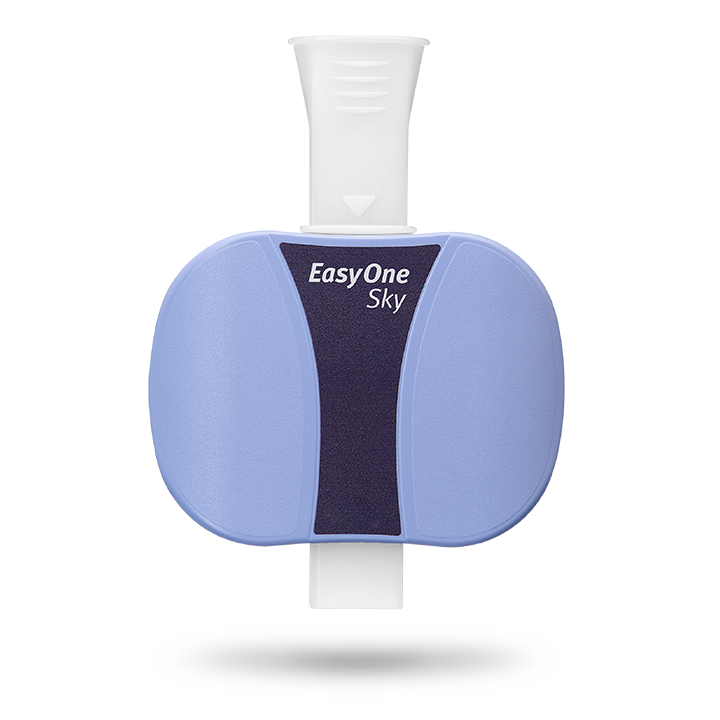
EasyOne Sky
Guided spirometry. Connected insights.
Disclaimer: This article references publicly available information from Fortune regarding home-based care programs by Aetna and Monogram Health. These references are used solely to illustrate broader trends in chronic disease management and do not imply any endorsement, partnership, customer relationship, or use of ndd products by the mentioned organizations.