Taking spirometry around the world - with Lindsay Zurba
In this customer spotlight, Lindsay Zurba shares how the ndd Easy on-PC spirometer has become an essential part of her workflow. With its ultrasonic technology, robust design, and intuitive software, the device has supported her work since 15 years across diverse environments — from hospitals and clinics to rural field settings where reliable and easy-to-use lung function testing is critical. Her experience shows how the right technology, combined with training and mentorship, can make high-quality pulmonary function testing possible wherever it is needed.
Lindsay, could you tell us a little about your journey into respiratory care? What first sparked your passion for lung health? #
My interest in respiratory health was really circumstantial. At that stage, I had completed my undergraduate nursing training and intensive care training, and I happened to start working in a respiratory practice. Someone sold the practice to the doctor and left behind a lung function laboratory.
Over about two years, with very little sleeping and very little eating, I taught myself by looking at graphs, looking at numbers, and trying to understand what we were trying to achieve. That’s how I became interested. Later, I was invited by the Durban Technikon to lecture postgraduate occupational health doctors and nurses on lung function testing. I told them I knew nothing about lung function testing, but they said, “You do it every day, so come and tell us what you do.” I spent two hours sharing what I did on a day-to-day basis and realized that, even though I felt I knew nothing, I maybe knew a little more than the people sitting in front of me. That’s really how it started.
You have been involved in several respiratory health programs across Africa and built your own program called Education for Health Africa. Could you tell us a bit about the work you are doing there? #
What started as being recognized within the city I lived in eventually expanded to other cities in South Africa, and then other African countries got in touch. Over the years, that has grown to become global, working with major respiratory organizations around the world to promote and teach lung function testing. Last year, for example, I was in 21 countries and 30 destinations. One project in Malawi for example, involved testing people who work on dump sites. I taught a team to do lung function testing, and they tested the workers. We worked in a tent in a field in Malawi for three weeks.
Can you tell us about the mission behind your training and education programs? #
My mission is about an innate love of people and wanting to see people prosper in their own personal and professional journeys. Mentoring is also a huge part of it. One of the biggest challenges I see is that people are trying to manage equipment and software they do not fully understand. They need support with configuration, with workflow, and with becoming comfortable in lung function testing. Helping people get settled and confident is a very big part of the mission.
Why is spirometry such an important tool when it comes to diagnosing and managing asthma and other respiratory diseases? #
Spirometry is a fantastic tool for primary care, secondary care, tertiary care, research, occupational health, and home care. There is almost no place where you cannot use spirometry. But it needs to be used responsibly and with real insight. And that takes training.
On lung health more broadly, testing is what gives us insight and information into what is truly going on in the respiratory system. It is not just what the patient feels or thinks, or what a family member thinks is happening. Testing gives physicians something objective, something in black and white, that they can use to guide treatment decisions. That information is essential.
You have worked with different spirometry technologies, but have been using ndd for 15 years. What makes a device truly useful in clinical practice, and how has it transformed your workflow? #
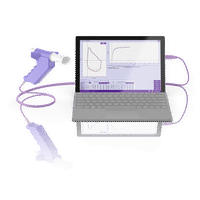
What I like about ndd is, first of all, that it is ultrasonic. It is the latest technology, with no moving parts, which makes it robust. it is very durable, light, and easy to carry around. What I appreciate about ndd is that the software is very capable, and that makes it much easier and friendlier to use.
I also think the data management has improved greatly over the years. It has become much easier to export data and include it in data management systems, and that is a big advantage for me as well.
Even when you are working in a rural area or going from site to site on a project, the Easy-on PC is still very easy to carry and use.
What is one key thing clinicians should keep in mind when performing spirometry? #
For me, the key take-home point with spirometry is this: engage with the patient, encourage the patient, and be with the patient. Spirometry is an interactive test. It is not something where you sit back, explain it once, and say, “Please go ahead.” You have to be engaged. Half of that result comes from the activity of the operator together with the patient.
It takes a lot of energy, but it is a true joy to get a great test from a patient and then interpret it with confidence.
Are there any upcoming projects you are especially excited about? #
There are always a lot of projects on the go, but one of the most exciting right now is the first Lung Health Task Force. The Forum of International Respiratory Societies has put together a Lung Health Task Force that is in the early stages of creating a lung health index, a global spirometry standard operating procedure that can be adapted to different contexts, a global spirometry training framework, and various other projects.
We are just about to start publishing on that work, and I think it is going to be transformative in bringing standardization to training. It will help define the bare minimum that should be included in spirometry training and help get training providers around the world onto the same platform. I think that is a very big deal in respiratory health and a great step forward for the community.
If there is one message you would like clinicians around the world to remember about lung health and the importance of lung function testing, what would it be? #
Having objective information is essential. It gives physicians something clear and reliable to work with and helps them decide whether to treat, how to treat, or when not to treat. That kind of information is incredibly valuable.
Spirometry is also a privilege. It is such a robust and useful test, and clinicians should enjoy having access to it. It can bring real value to day-to-day practice, research, and patient care when it is used well.
Are there any moments that have particularly stayed with you? #
In Rwanda, I went to work on a motorbike with a syringe under one arm and equipment under the other, traveling along a dirt road to a little hut in a very rural area.
I have also gone to work sitting on the back carrier of a bicycle in one area. In Malawi, I remember waking up in a small town outside Blantyre with a goat outside my window, and cows standing nearby chewing and staring at you. There are just so many interesting moments like that.
About Lindsay Zurba: #
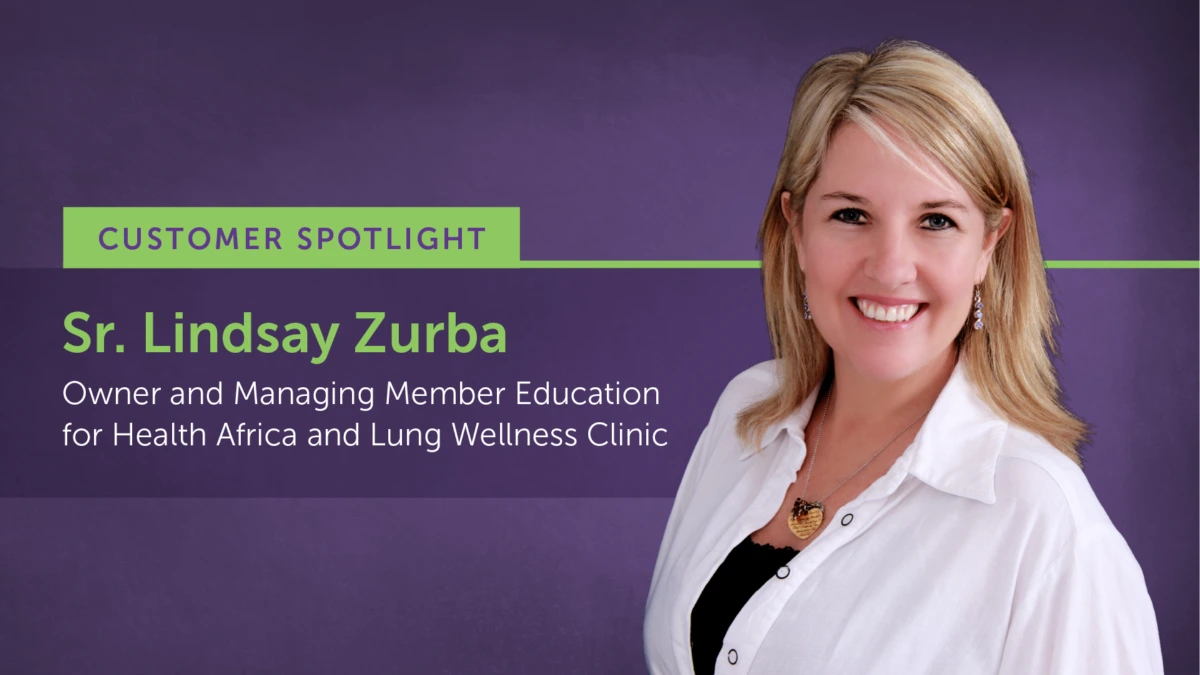
Sr. Lindsay Zurba
Owner and Managing Member Education for Health Africa and Lung Wellness Clinic
Lindsay Zurba is a respiratory nurse practitioner, educator, and global lung health advocate with more than 30 years of experience in respiratory care. She is widely recognized for her work in lung function testing, spirometry training, and respiratory education across diverse healthcare settings worldwide.
As founder of Education for Health Africa and director of the Lung Wellness Clinic, Lindsay is dedicated to improving access to quality lung function testing and respiratory care. She trains and mentors healthcare professionals globally, helping clinicians develop the skills needed to deliver accurate spirometry and better manage respiratory diseases such as asthma and COPD.
Her work spans clinical care, education, and global research initiatives. Lindsay collaborates with leading respiratory organizations including the Pan African Thoracic Society (PATS), International Primary Care Respiratory Group (IPCRG), European Respiratory Society (ERS), and the Forum of International Respiratory Societies (FIRS) Lung Health Taskforce, contributing to international efforts to improve respiratory diagnostics and training worldwide.
Find an example of Lindsay’s work with the Easy on-PC in the Lancet Journal here: Asthma symptoms, severity, and control with and without a clinical diagnosis of asthma in early adolescence in sub-Saharan Africa: a multi-country, school-based, cross-sectional study - The Lancet Child & Adolescent Health
Oyenuga VO, Ndimande N, Amaral AFS, Mosler G, Addo E, Owusu SK, et al. Asthma symptoms, severity, and control with and without a clinical diagnosis of asthma in early adolescence in sub-Saharan Africa: a multi-country, school-based, cross-sectional study. Lancet Child Adolesc Health. 2024;8(12):859-871. doi:10.1016/S2352-4642(24)00232-3.