When lung function testing is misused, the costs add up
Accurate diagnosis is essential to delivering effective respiratory care, yet COPD continues to be both underdiagnosed and overdiagnosed. Without spirometry, clinicians may struggle to distinguish COPD from other conditions with similar symptoms, increasing the risk of inappropriate treatment and unnecessary healthcare costs. This article explores why spirometry is critical for improving diagnostic accuracy and patient outcomes while reducing the financial burden of misdiagnosis.

Introduction #
Pulmonary function tests have the potential to deliver tremendous value across healthcare settings, but only when they are performed accurately and used in the right clinical context. Improper testing or interpretation can lead to poor patient outcomes and unnecessary costs for healthcare systems. The good news is that these risks are largely preventable through proper testing practices and clinical oversight.
COPD, one of the most common diseases in the world, is both under- and overdiagnosed1. While it appears to be a paradox, it isn’t. Why this is the case is in part due to how the condition is diagnosed.
To formally diagnose somebody with COPD, spirometry must be performed to document pulmonary obstruction in addition to typical COPD symptoms and risk factors. But spirometry is not always accessible when patients present to clinicians with the symptoms and risk factors for COPD. 1 in 3 people receive a diagnosis of COPD without spirometry2. The challenge here is that many pulmonary diseases share similar symptoms, risk factors, and causes. Even obstructive pulmonary diseases and restrictive pulmonary diseases — which produce different spirometry results — can occasionally present with the same symptoms. Without spirometry, patients can be misdiagnosed with COPD when they have a different pulmonary disease.
On the other hand, sometimes COPD symptoms emerge slowly, and people can live with the condition for quite some time prior to seeing a clinician or performing a spirometry test to confirm suspicion of COPD.
Due to both, consequences compound, driving avoidable costs to the people living with pulmonary conditions and the institutions taking care of them.
Clinical implications of misdiagnosis #
Long-acting beta-agonists (LABAs) are bronchodilators and one of the most common and first-used medications when treating COPD.
An incorrect diagnosis of COPD in a patient who actually has asthma can pose significant risks. LABAs carry an FDA boxed warning for asthma and should only be used in combination with an inhaled corticosteroid (ICS)3. LABA use in asthma has been linked to an increased risk of asthma-related death3, making accurate diagnosis essential to ensuring safe and effective treatment.
While this is one specific example and is rare, it illustrates the enormous importance of ensuring that people do not receive a misdiagnosis.
More broadly, this example underscores the importance of correct diagnoses as misdiagnoses and delayed diagnoses prolong the period somebody has poor control of their condition. This means people may not be on any medication or, possibly worse, may be on the wrong medication entirely. Poorly controlled asthma and COPD may lead to worse outcomes, more hospitalizations, more emergency room visits, and poorer quality of life. The shorter the time between symptom onset and correct diagnosis, the better.
Where does spirometry come into play? #
Using clinical observation alone, the underlying mechanism of disease can be neglected or missed, preventing the full picture from being considered. With spirometry, clinicians can assess how much obstruction is present and whether there is an obstructive or restrictive element (or both) to an individual’s clinical presentation. This provides more information that helps to better analyze the patient’s status, reducing the chance of misdiagnosing the person, and ensuring they are prescribed the right treatment.
Key points about misdiagnosis:
- The majority of COPD diagnoses made without spirometry are misdiagnoses. Up to 62% of COPD diagnoses made without spirometry are classified as misdiagnoses4. Similarly, up to 33% of asthma diagnoses are also classified as misdiagnoses when spirometry is not used4.
- The vast majority of the global COPD burden remains undiagnosed. Estimates suggest up to 95% of global COPD cases remain undiagnosed, meaning clinicians are managing only a fraction of the true disease burden5.
- Two-thirds of COPD patients are diagnosed late. Potentially around two-thirds of all COPD diagnoses are considered late diagnoses, given after the disease is considered more advanced6. Late diagnoses are associated with worse outcomes, including higher rates of hospitalizations and healthcare utilization.
Financial implications of misdiagnosis #
In addition to the clinical implications, there are significant financial costs to delayed diagnoses and misdiagnoses that clinicians, hospital systems, and healthcare administrators must consider.
There are secondary cost effects to delayed diagnoses, for example. When people are living with COPD without a diagnosis, they visit emergency rooms more often, leading to increased healthcare costs and utilization while prolonging the period of disease where they don’t have a handle on their health.
Delaying the time it takes for people to get on the right treatment regimen can also lead to increased exacerbations. Exacerbations are a major contributor to increased morbidity and mortality in people with COPD. Exacerbations are significant events in their own right, but they also serve as important indicators of a patient’s risk for future complications. COPD-related hospitalizations for exacerbations are one of the greatest driver of costs7. Even more, increased exacerbation frequency leads to more readmissions that drain resources and carry penalties for hospitals.
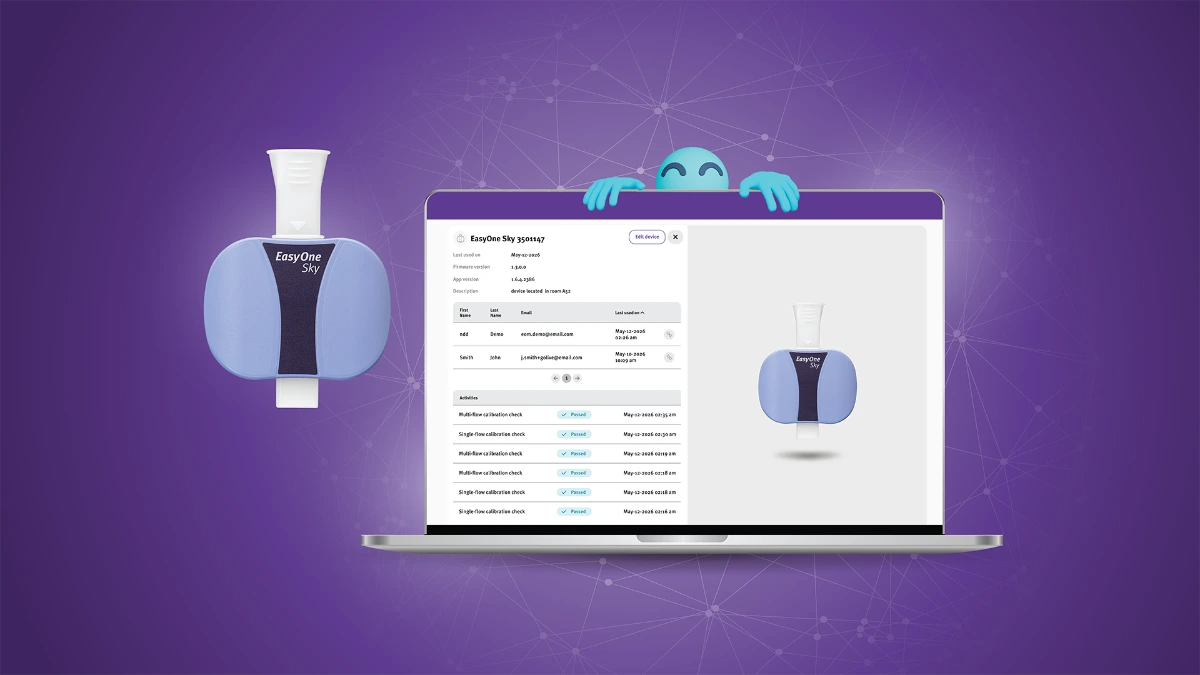
Not all the challenges that come with COPD can be fully prevented, but spirometry can significantly help reduce the financial consequences of misdiagnoses. By implementing modern, portable, and highly reliable spirometry devices, clinics can diagnose people earlier, monitor people as they get started on treatments, and reduce the frequency and consequences of exacerbations.
The sooner somebody is diagnosed upon their symptom onset or exacerbations are identified, the higher likelihood that the worst-case scenarios are prevented, giving patients better quality of life, and reducing costs, resource strain, and penalties incurred by the clinics.
Current COPD financial outlook:
- COPD costs the US healthcare system tens of billions annually — and is growing. A 2024 study in CHEST Journal concluded that total direct costs for COPD in the United States in 2019 were $31.3 billion and are projected to grow to $60.5 billion in 20298.
- The global macroeconomic burden of COPD is staggering without intervention. COPD is expected to cost the global economy $4.3 trillion between 2020 and 2050 if there is no investment in effective interventions9.
- Readmissions are a major cost driver. Readmissions significantly contribute to higher healthcare costs, resource constraints, and patient mortality. Nearly 20% of people with COPD are readmitted within 30 days10.
Practical tips for improving implementation of spirometry #
Clinicians play a key role in ensuring accurate diagnosis of COPD through the appropriate use and interpretation of spirometry. They can do it with the following tips:
- Invest in high-quality spirometry equipment
- Ensure proper staff training
- Follow standardized guidelines
- Implement quality control measures
Conclusion #
COPD remains a major public health problem, and diagnostic rates remain suboptimal, in part because spirometry is not utilized as effectively as it could be as a screening and monitoring tool. With the advent of portable, accessible, and highly reliable pulmonary function test devices, clinics can create a new revenue source while also addressing one of the most pressing issues in COPD.
Vila M, Sisó-Almirall A, Ocaña A, Agustí A, Faner R, Borras-Santos A, González-de Paz L. Prevalence, diagnostic accuracy, and healthcare utilization patterns in patients with COPD in primary healthcare: a population-based study. NPJ primary care respiratory medicine. 2025 Mar 21;35(1):17 ↩︎
Baldomero AB, et al. Beyond Access: Factors Associated With Spirometry Underutilization Among Patients With a Diagnosis of COPD in Urban Tertiary Care Centers. Journal of the COPD Foundation. 2022 ↩︎
Aschenbrenner DS. Major Change in Warning for Asthma Drugs. AJN Am J Nurs. 2018;118(4):22-23. doi:10.1097/01.NAJ.0000532068.09598.88 ↩︎ ↩︎
Jørgensen IF, Brunak S. Time-ordered comorbidity correlations identify patients at risk of mis- and overdiagnosis. Npj Digit Med. 2021;4(1):12. doi:10.1038/s41746-021-00382-y ↩︎ ↩︎
Ho T, Cusack RP, Chaudhary N, Satia I, Kurmi OP. Under- and over-diagnosis of COPD: a global perspective. Breathe. 2019;15(1):24-35. doi:10.1183/20734735.0346-2018 ↩︎
Kostikas K, Price D, Gutzwiller FS, et al. Clinical Impact and Healthcare Resource Utilization Associated with Early versus Late COPD Diagnosis in Patients from UK CPRD Database. Int J Chron Obstruct Pulmon Dis. 2020;15:1729-1738. doi:10.2147/COPD.S255414 ↩︎
Larsen DL, Gandhi H, Pollack M, et al. The Quality of Care and Economic Burden of COPD in the United States: Considerations for Managing Patients and Improving Outcomes. American Health & Drug Benefits. 2022;15(2):57-64 ↩︎
Mannino DM, Roberts MH, Mapel DW, et al. National and Local Direct Medical Cost Burden of COPD in the United States From 2016 to 2019 and Projections Through 2029. CHEST. 2024;165(5):1093-1106. doi:10.1016/j.chest.2023.11.040 ↩︎
Chen S, Kuhn M, Prettner K, et al. The global economic burden of chronic obstructive pulmonary disease for 204 countries and territories in 2020–50: a health-augmented macroeconomic modelling study. Lancet Glob Health. 2023;11(8):e1183-e1193. doi:10.1016/S2214-109X(23)00217-6 ↩︎
Shah T, Press VG, Huisingh-Scheetz M, White SR. COPD Readmissions. Chest. 2016;150(4):916-926. doi:10.1016/j.chest.2016.05.002 ↩︎
Written by

Tré LaRosa
Scientist & Medical writer
Tré LaRosa is a consultant, scientist, and medical writer based in the Washington, DC area, with a strong foundation in clinical research and a particular expertise in patient reported outcomes and respiratory health communication.
Read more about Tré LaRosa